Table of Contents
What is San Ginesio DOC?
San Ginesio DOC is one of Marche’s tiniest and most distinctive appellations: a denomination dedicated exclusively to red wine and red sparkling wine in the high hills of Macerata province, near the Sibillini Mountains. It was established in 2007 and remains extremely small, with just 7 hectares under vine and about 300 hectoliters of average annual production, according to Italian Wine Central. That makes San Ginesio wine rare even by Italian micro-DOC standards.
What makes San Ginesio wine especially compelling is its dual identity. The still Rosso is built around Sangiovese, while the Spumante—in both secco and dolce styles—must be based primarily on Vernaccia Nera. In other words, one tiny appellation carries two distinct red-wine traditions: a hill-country Marche rosso and a fragrant, regional sparkling red.
That split personality is exactly why San Ginesio DOC deserves more attention in English. Most small Italian appellations revolve around a single style; San Ginesio wine instead tells two stories at once: central Italian red-wine culture through Sangiovese, and Marche’s much rarer sparkling-red heritage through Vernaccia Nera.
History and Origins
The official disciplinare roots local viticulture surprisingly far back. It explains that after the fall of the Roman Empire, populations moved into more defensible hill settlements, and that San Ginesio grew in importance during the medieval period. Most notably, the text cites 16th-century local historians who transcribed records of vineyard-land donations dating to 1040, giving the area one of the more evocative early wine paper trails in central Italy.
The same official source says viticulture remained widespread in the area through the medieval and later periods, with the territory suited to both red and white grapes. This was not a prestige export zone in the modern sense so much as a lived agricultural landscape where wine remained part of the local economy and food culture. That context helps explain why San Ginesio wine still feels artisanal and place-bound today.
Vernaccia Nera is central to that local identity. Producer and regional sources place the grape firmly in the inland hills of Macerata near the Sibillini, not on the Adriatic plain. San Ginesio DOC’s eventual recognition in 2007 fits a broader Italian pattern: formalizing and protecting small traditional zones whose wine history is much older than their legal paperwork.
Where It’s Made: Geography & Terroir
The production zone lies in Macerata province and includes San Ginesio, Caldarola, Camporotondo di Fiastrone, Cessapalombo, Ripe San Ginesio, Gualdo, Colmurano, Sant’Angelo in Pontano, and Loro Piceno. The disciplinare describes San Ginesio as the fulcrum of the denomination.
Geographically, this is a sub-Apennine hill zone framed by the Chienti River, the Sibillini Mountains, and the Fiastra River, about 25 to 50 kilometers from the Adriatic Sea. That inland-but-not-isolated position is part of the appellation’s appeal: San Ginesio wine is mountain-influenced, but not cut off from Adriatic moderation.
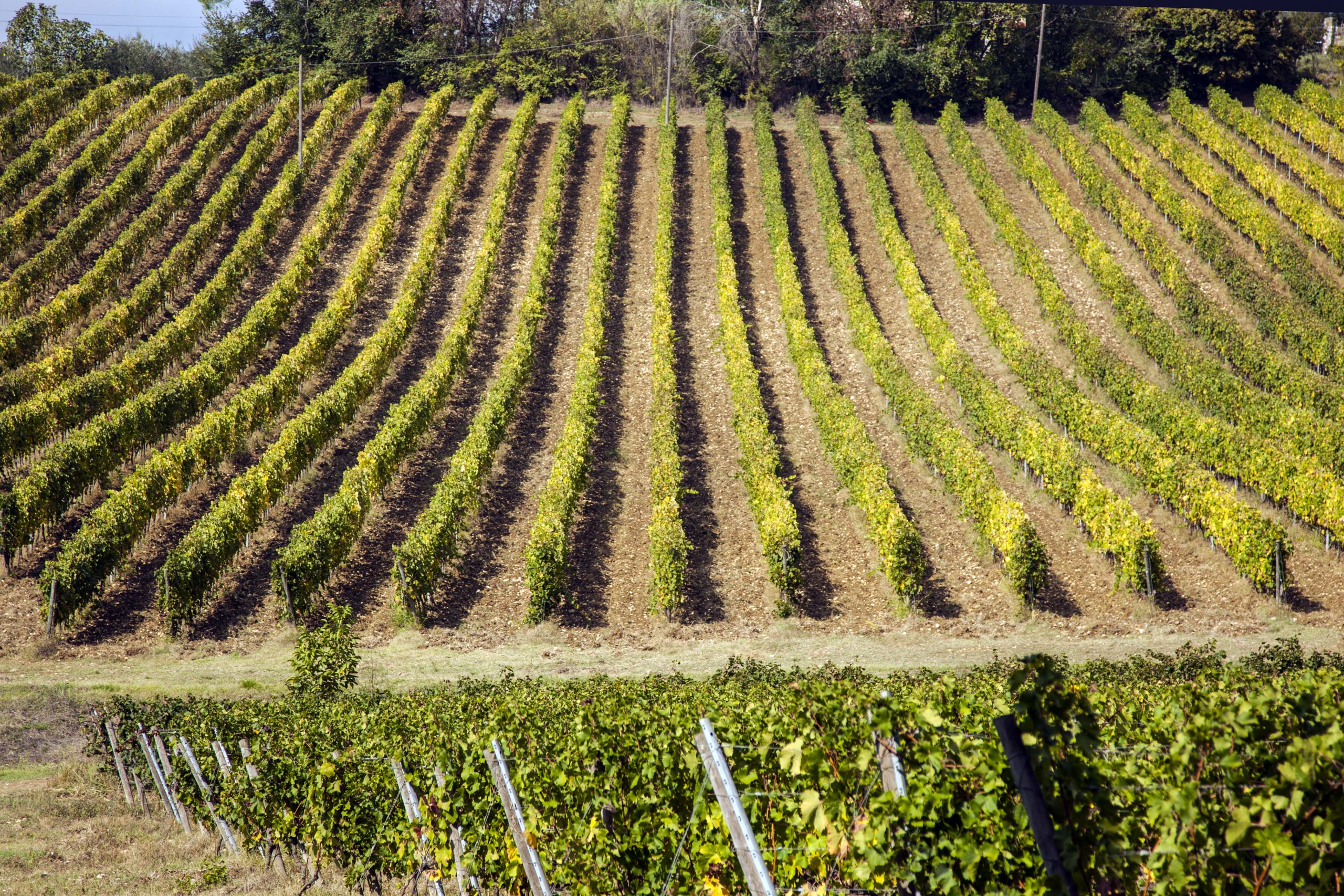
The official DOC text gives unusually concrete climate detail. It places most vineyards between 300 and 700 meters above sea level, with slopes generally from 2% to 35%. Annual rainfall is described as generally above 800 mm, average annual temperature as 12–15°C, the coldest month around 3–5°C, and the warmest around 21–23°C. The disciplinare also explicitly links the zone to slow ripening and the retention of good fixed acidity.
Those conditions help explain why this tiny zone can support both a fresh still red and a vivid sparkling red. For San Ginesio Rosso, elevation and cool nights help preserve acidity and shape in Sangiovese-based blends. For San Ginesio Spumante, the same slow ripening is ideal for keeping Vernaccia Nera aromatic and lively enough for bubbles. That last point is an inference from the climate and wine styles, but it is strongly supported by the disciplinare’s emphasis on acidity retention.
Soils are derived largely from calcareous parent material, with high proportions of clay and calcium carbonate, plus marl, sandstone, and conglomeratic elements. In wine terms, that points toward structure, brightness, and savory grip rather than easy softness.
The Grape (or Blend)
San Ginesio DOC is unusual because its two main styles are built around different grapes and different red-wine philosophies.
For San Ginesio Rosso, the rules require at least 50% Sangiovese, plus at least 35% from one or more of Vernaccia Nera, Cabernet Sauvignon, Cabernet Franc, Merlot, and Ciliegiolo, with up to 15% of other authorized non-aromatic red grapes. For San Ginesio Spumante, the base must be at least 85% Vernaccia Nera.
Sangiovese: the backbone of the Rosso
In the Rosso, Sangiovese gives San Ginesio wine its central-Italian frame: red fruit, acidity, and tannic shape. The disciplinare notes that the grape spread through the area from the second half of the 19th century, appreciated for its ability to adapt to relatively poor soils while still producing quality fruit.
That matters because San Ginesio Rosso is not trying to compete with Brunello or Chianti Classico on scale or prestige. Its role is different: a small mountain-hill red where Sangiovese delivers form and tension, while the blending grapes soften, perfume, or deepen the wine. Terre di San Ginesio’s Carpentano, for example, is made from Sangiovese, Vernaccia Nera, and Cabernet Sauvignon, which gives a practical sense of how local producers balance tradition with flexibility.
Vernaccia Nera: the distinctive star
The more distinctive grape here is Vernaccia Nera. Italian Wine Central identifies it as a genetic match with Garnacha/Grenache, while also noting that these related grapes developed in relative isolation over centuries. It describes Vernaccia Nera as generally light in color with floral and herbal aromatic tendencies.
That Grenache connection is important, but it needs context. In warmer Mediterranean settings, Grenache often leans toward high alcohol, softer structure, and ripe red-fruit warmth. Vernaccia Nera in inland Marche behaves differently. In the high hills around San Ginesio, the grape shows more perfume, more freshness, and more lift—one reason it works so well in sparkling form. That contrast is partly interpretive, but it is supported by the grape’s aromatic profile and the zone’s cool, slow-ripening climate.
Why Vernaccia Nera works for sparkling wine
This is the key to understanding San Ginesio Spumante. Many red grapes can become heavy or coarse once sparkling; Vernaccia Nera is better suited because it brings three things sparkling wine needs: aromatics, freshness, and moderate tannin. Producer descriptions of San Ginesio Spumante repeatedly emphasize rose, violet, currant, blueberry, pepper, and freshness, while the disciplinare’s climate section stresses preserved acidity.
The result is an Italian sparkling red wine that feels more floral and mountain-bright than most drinkers expect. Compared with Lambrusco, it is usually more perfumed and less darkly savory. Compared with Brachetto d’Acqui, it is less grapey and often more structured. Compared with Vernaccia di Serrapetrona DOCG, it shares the same grape family identity but follows a different route: San Ginesio Spumante is made from fresh grapes and the Charmat/Martinotti method, rather than the more intricate dried-grape tradition associated with Serrapetrona.
That is why San Ginesio wine feels so specific. It is not simply “sparkling Grenache.” It is Marche’s mountain expression of Vernaccia Nera: floral, lightly spicy, fresh, and regionally idiosyncratic.
Winemaking & DOC Regulations
The DOC authorizes three commercial expressions: San Ginesio Rosso, San Ginesio Spumante Secco, and San Ginesio Spumante Dolce. Italian Wine Central lists minimum alcohol levels of 11.5% for Rosso and 11.0% for Spumante, with residual sugar for Spumante Secco at 17–35 g/L and Spumante Dolce at 50 g/L or more.
That sweetness language deserves a little explanation. By strict sparkling-wine terminology, “secco” here is not bone-dry. But the disciplinare also describes the secco version as having a pleasantly bitter finish, and that bitterness, together with acidity and bubbles, helps the wine taste drier and more aperitivo-ready than the sugar number alone might suggest.
Producer material fills in the practical picture. Vini Rocchi describes both its secco and dolce bottlings as 100% Vernaccia Nera, made with the Charmat method from grapes vinified completely fresh at harvest. Terre di San Ginesio says its Vernà Spumante Dolce undergoes a long secondary fermentation by the Martinotti method.
That method choice makes sense stylistically. Tank fermentation is especially good at preserving the grape’s fresh floral and fruity notes rather than pushing the wine toward brioche or yeasty autolysis. In San Ginesio DOC, the point of the sparkling wine is not Champagne-like complexity; it is vivid perfume, freshness, and regional character. That is an inference, but it aligns closely with the producer descriptions and the wine’s sensory profile.
For the Rosso, Terre di San Ginesio provides a useful example through Carpentano: hand harvest, separate vinifications, around 7–10 days on the skins, assembly in steel, and short élevage before release. That profile suits the denomination well—fragrant, accessible, food-friendly, and not overworked by oak.
Key Facts at a Glance
| Feature | Details |
| Region | Marche |
| Province | Macerata |
| DOC established | 2007 |
| Vineyard area | 7 ha |
| Production | 300 hl |
| Styles | Rosso, Spumante Secco, Spumante Dolce |
| Rosso blend | Min. 50% Sangiovese |
| Spumante blend | Min. 85% Vernaccia Nera |
| Altitude | Mostly 300–700 m |
| Rainfall | Generally above 800 mm |
| Avg. annual temperature | 12–15°C |
| Soils | Calcareous, clay-rich, with marl/sandstone/conglomerate elements |
These figures come from the denomination profile and official disciplinare.
Tasting Notes
San Ginesio Rosso
In the glass, San Ginesio Rosso is typically ruby red, often with youthful violet tones. The official profile calls the bouquet delicate and characteristic; producer notes from Terre di San Ginesio add more specificity, describing a fragrant wine with floral and fruity character, while retail descriptions mention violet, fruit, spice, and pleasant tannin.
In practical tasting terms, San Ginesio wine in Rosso form tends to show red cherry, violet, mild black-pepper spice, and fresh acidity, with moderate structure rather than weight. It usually feels leaner and more lifted than many warmer, broader Marche reds. Compared with Rosso Piceno, it can feel more hill-country and less sun-filled; compared with Chianti, it is often softer in profile and a bit more floral when Vernaccia Nera is in the blend. Those comparisons are interpretive, but they fit the grape mix and terroir.
San Ginesio Spumante Secco
The dry sparkling version is the denomination’s signature surprise. The disciplinare describes fine, persistent mousse, ruby color with violet to garnet reflections, a fruity nose, and a palate marked by a pleasant bitterish finish. Vini Rocchi describes it as ruby-to-purple, fine-grained, persistent, and fresh, fruity, and floral.
Sensory-wise, expect violet, rose, red currant, wild berry, and light spice, plus a freshness that keeps the wine agile. This is not a copy of Lambrusco. It is usually more perfumed and less earthy, with a cleaner mountain line. Nor is it a copy of sweeter aromatic sparkling reds; the secco style uses bitterness and acidity to keep the finish lively and food-friendly.
San Ginesio Spumante Dolce
The sweet version keeps the ruby color and fine mousse, but leans more overtly toward perfume and fruit. Terre di San Ginesio describes rose, violet, currant, blueberry, herbaceous and spicy notes, with a palate that is sweet but not cloying. A producer PDF echoes that profile, adding fine bubbles, soft persistent red foam, and good persistence.
This is where San Ginesio wine becomes especially charming. The sweetness makes it festive, but the acidity and the grape’s floral-herbal profile keep it from becoming heavy. Compared with Brachetto d’Acqui, it usually feels a bit less confectionary and a bit more savory-floral. Compared with dessert reds made without bubbles, it is lighter on its feet.
Serving & Pairing
For San Ginesio Rosso, producer guidance points to service around 16°C and pairings such as ciauscolo, lardellato salami, pecorino, porchetta, fried lamb, bollito, and vincisgrassi. That makes sense: this is a red for Marche comfort food rather than formal cellar ritual.
For San Ginesio Spumante Dolce, 11°C is the recommended serving temperature, with pairings such as dry pastries, rustic desserts, and berry preserves.
For San Ginesio Spumante Secco, producer notes and style cues suggest aperitivo duty, salumi, and cheeses. Editorially, it also makes excellent sense with charcuterie boards, roast pork, and festive antipasti where a red sparkling wine can bring both freshness and surprise.
Where to Buy & Pricing
For such a tiny denomination, San Ginesio DOC is refreshingly easy to price because the producer sites publish direct retail figures.
Terre di San Ginesio Carpentano San Ginesio Rosso DOP is currently listed at €9.40 on the winery shop. Vernà San Ginesio Spumante Dolce DOC is listed there at €8.10.
Vini Rocchi San Ginesio Spumante Secco DOC is listed at €7.00, and Vini Rocchi San Ginesio Spumante Dolce DOC is also listed at €7.00. The same pricing appears in the winery’s shop pages and product pages.
That means San Ginesio wine currently sits in a striking value band: roughly €7–€10 for bottles from one of Italy’s rarest DOCs. With only 7 hectares and 300 hectoliters in the denomination, that is strong value for genuinely niche, place-specific wine.
In producer terms, Terre di San Ginesio traces its current form to 2005, describing itself as the evolution of an earlier cooperative and a family-led continuation of long local winegrowing tradition in the Fiastra valley. Vini Rocchi emphasizes a long local tradition centered on Vernaccia Nera, with production focused on San Ginesio Spumante and related local wines.
International availability appears limited. A U.S. importer page for Paris Rocchi notes that the producer was the first to obtain the San Ginesio DOC in 2007 and says there are only a few growers in the denomination. That supports the general picture: most San Ginesio wine remains domestic or highly specialized export stock.
FAQ on San Ginesio DOC
- Is San Ginesio DOC a red-only denomination?
Yes in color, but not in style: it covers still red and red sparkling wine, not whites. - What grapes are used in San Ginesio Rosso?
At least 50% Sangiovese, plus at least 35% from Vernaccia Nera, Cabernet Sauvignon, Cabernet Franc, Merlot, and/or Ciliegiolo. - What grape defines San Ginesio Spumante?
Vernaccia Nera, at a minimum of 85%. - Is San Ginesio Spumante always sweet?
No. The DOC allows both secco and dolce versions. - Why does Vernaccia Nera work so well for sparkling wine?
Because it combines aromatic lift, preserved mountain acidity, and relatively moderate tannin, which together make a red sparkling wine feel fragrant and fresh rather than heavy. This is an inference based on the grape profile, climate, and producer tasting notes. - How small is the appellation?
Italian Wine Central reports only 7 hectares and about 300 hectoliters of average annual production. - How does San Ginesio compare with other Marche DOCs?
It is far smaller than major Marche denominations. Compared with Rosso Piceno, San Ginesio Rosso is usually leaner and more mountain-fresh. Compared with Vernaccia di Serrapetrona, San Ginesio Spumante is made from fresh grapes and Charmat/Martinotti fermentation, giving a lighter, fresher style. - Where is the heart of the denomination?
In the hills around San Ginesio in Macerata province, near the Sibillini Mountains. - Can San Ginesio wine be aged?
The DOC does not define long mandatory aging, and most examples are positioned for youthful drinking. Rosso may gain short-term complexity, but the Spumanti are generally best for freshness and aromatic expression. That is an informed style inference rather than an official aging rule.
Fun Facts & Cultural Notes
The denomination’s 7-hectare scale makes it smaller than many individual famous vineyard sites in Europe. In practical terms, San Ginesio DOC is not just small; it is a true micro-DOC.
The official historical narrative traces vineyard references in the territory back to 1040, giving San Ginesio wine a far deeper history than its 2007 DOC status might suggest.
And perhaps most charmingly, this is one of the rare Italian appellations where a red sparkling wine is not a novelty offshoot but a core pillar of the denomination itself.
San Ginesio DOC is one of Marche’s quietest wine secrets: a 7-hectare micro-appellation where Sangiovese Rosso shares the stage with fragrant Vernaccia Nera sparkling red. Would you open the secco with salumi, the dolce with dessert, or the Rosso with vincisgrassi? Tell us your pairing in the comments, and subscribe to Drink Italian for more under-the-radar DOCs worth discovering.
Have fun to learn more about Italian Wines and Spirits! Explore also the non-alcoholic beverages
Send us an email if you want to suggest edits, or if you are looking for more info, at
cheers@drinkitalian.com
If you are in the mood for a good book, you can try:
– The Modern History of Italian Wine by Walter Filipputti
– Hidden Gems of Italy: An Insider’s Secret Formula To Find Top-Class Italian Wines At Value Prices And Taste La Dolce Vita by Tony Margiotta
Additionally, you can discover the other wines from Marche.