Imagine stumbling on a wine so rare that even many Italian wine people have never tasted it. That’s the pull of I Terreni di Sanseverino DOC—a micro-appellation rooted around San Severino Marche, where local reds and a traditional sweet Passito survive more as culture than commerce.
This isn’t a prestige label, and it’s not trying to compete with trophy reds. It’s inland Marche in a glass: hillside freshness, herb-edged fruit, and that quietly rustic “this was made to eat with” energy you only get from regions that never built their identity around export.
Why this matters right now
Wine drinkers are hunting for exactly what this DOC offers:
- Real regional identity (indigenous grapes, small zones, local tradition)
- Food-first reds (brightness, savory structure, modest alcohol)
- Genuine rarity (not manufactured scarcity—actual limited production)
- Value (because obscurity still keeps prices sane)
If Verdicchio is Marche’s famous headline, I Terreni di Sanseverino DOC is the inland footnote that turns into your favorite paragraph.
Table of Contents
History and identity: San Severino Marche’s quiet wine culture
San Severino Marche sits in a part of Italy where agriculture has historically been mixed and practical—vineyards alongside wheat, olives, livestock, orchards. For generations, wine here wasn’t a brand. It was a household constant: poured at Sunday lunch, offered at festivals, made for family tables and local trattorie.
Vernaccia Nera: local continuity, not a trend
The DOC’s most distinctive thread is Vernaccia Nera (not related to Vernaccia di San Gimignano). It has long been part of inland Marche’s vineyard patchwork—kept alive because locals liked how it tasted with local food, not because the market demanded it.
Why a DOC in 2004?
This is the key point: the DOC wasn’t created to “go global.” It exists to keep a fragile local practice from fading out—codifying grapes, styles, and identity so the wines remain recognizably “from here,” even as rural viticulture everywhere faces pressure from economics and depopulation.
In other words: this appellation is more like a protected cultural artifact than a commercial engine.
Where it’s made: inland Marche terroir (between sea air and mountain nights)
The zone centers on San Severino Marche in the Province of Macerata—an inland landscape of rolling hills and river-cut valleys, sitting between:
- the Adriatic coast (with its gentler maritime influence), and
- the Apennines (which bring cooler nights and more continental rhythm)
What the landscape feels like
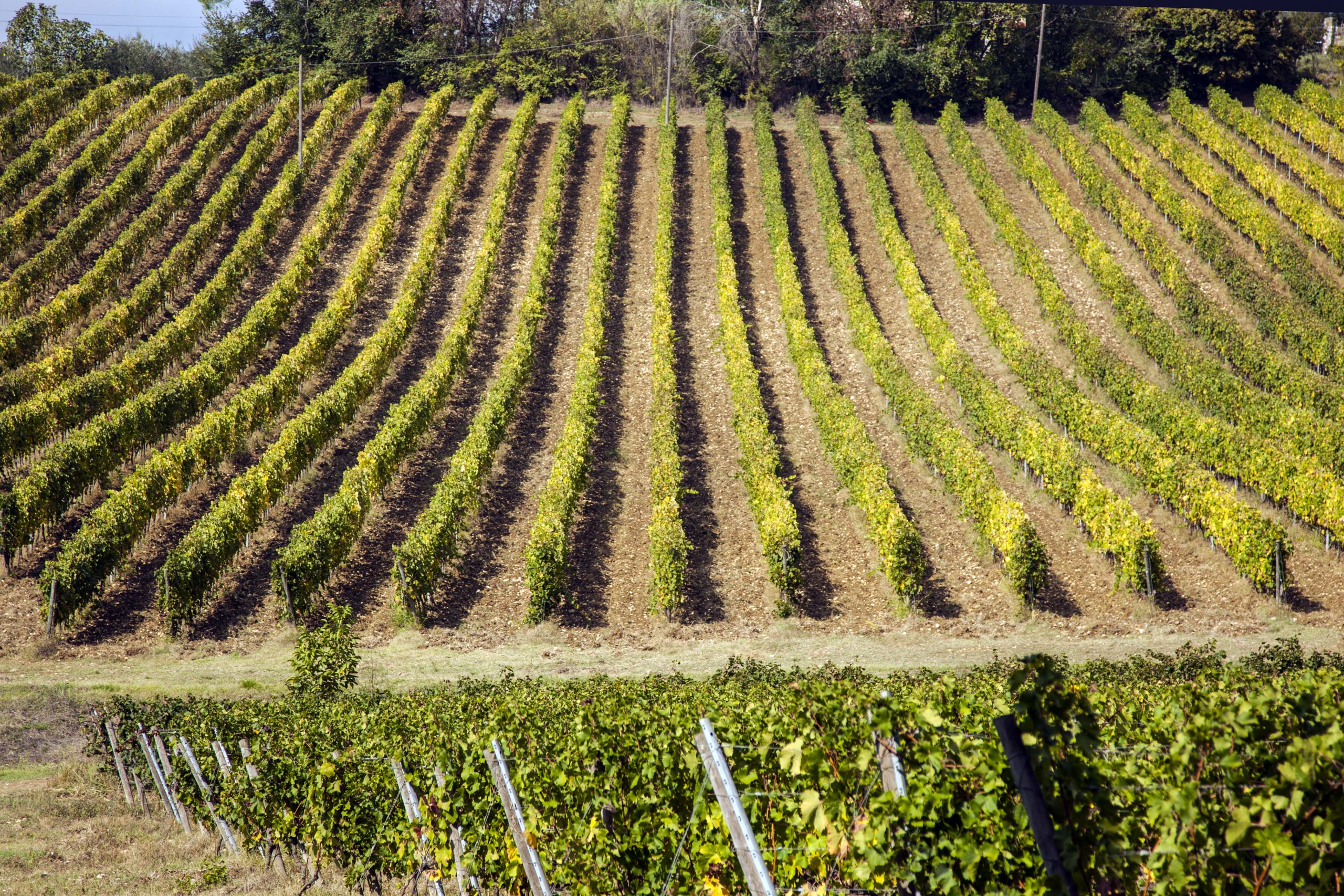
Think hill-town Marche: stone streets, fields stitched together by hedgerows, vineyards in small parcels rather than grand estates. It’s the kind of countryside where a winery visit might feel like stopping by someone’s farm—not an experience center.
Why the wines taste the way they do
Even without “fame terroir,” the fundamentals show up in the glass:
- Elevation and night cooling help preserve acidity (so reds stay food-friendly, not heavy).
- Inland structure leans more savory than coastal fruitiness.
- Hillside farming tends to bring cleaner fruit and better balance than flatland heat accumulation.
Terroir takeaway: these wines aren’t built for sweetness, oak gloss, or blockbuster power. They’re built for structure + freshness + the table.
The grapes of I Terreni di Sanseverino DOC
Vernaccia Nera: one of Italy’s under-the-radar red grapes
Vernaccia Nera is the DOC’s signature and the main reason this appellation feels so “inside baseball.” Expect a profile that’s distinctly Italian in the best way—bright fruit, herbs, and a savory edge that begs for food.
Typical Vernaccia Nera markers:
- Fruit: sour cherry, red plum, wild berry
- Herbs: oregano, thyme, dried field herbs
- Shape: medium body, fresh acidity, gentle-to-moderate tannin
- Vibe: rustic-but-clean when well made—more hill-town than showroom
Montepulciano: the muscle behind “Moro”
The Moro style leans into Montepulciano (deeper color, darker fruit, firmer structure). If Rosso is the everyday table red, Moro is the “give me something fuller” lane—still Marche in spirit, just with broader shoulders.
Wine styles you’ll see on labels (and how to choose)
Rosso
The entry point: bright, savory, easy to pair. Think weeknight red that shines with pasta and salumi.
Rosso Superiore
More concentration and structure—often the best “serious value” category. If you want one bottle to understand the DOC’s potential, start here.
Moro
The fuller style (Montepulciano-led): darker fruit, more tannin, more weight—best with richer dishes and grilled meats.
Rosso Passito
The tradition lane: sweet red made from dried grapes, designed for slow sipping, desserts, or blue cheese. This is where the DOC turns from “rare” to “cultural time capsule.”
What does I Terreni di Sanseverino DOC taste like?
Rosso (young, 1–3 years)
Aromas: sour cherry, red plum, dried oregano, subtle earth
Palate: dry, medium-bodied, bright acidity; tannins feel “food-ready,” not aggressive
Finish: savory-herbal, with a gently rustic snap
Best described as: hill-town Marche red that makes tomato sauce taste better
Rosso Superiore (2–6 years)
Aromas: cherry compote, dried herbs, violets, hints of leather in older bottles
Palate: more structure than Rosso—still fresh, but with deeper mid-palate and longer finish
Finish: firmer, more persistent, often with a pleasant bitter-cherry edge
Best described as: the version you open when dinner is actually a plan
Moro (3–8+ years)
Aromas: black cherry, plum, cocoa, dried herbs, subtle spice
Palate: fuller and darker; tannins more present, acidity still keeps it honest
Finish: savory, slightly smoky/earthy depending on producer choices
Best described as: Montepulciano energy with inland Marche restraint
Rosso Passito (5–20+ years)
Aromas: dried cherry, fig, cocoa, baking spice, herbal lift
Palate: sweet but structured—concentrated fruit, layered spice, and enough freshness to avoid syrup
Finish: long, warming, quietly complex
Best described as: dessert wine for people who don’t like “dessert wine”
When to drink it: quick aging timeline
| Style | Best drinking window | Aging potential |
| Rosso | 1–3 years | up to ~5 years |
| Rosso Superiore | 2–6 years | ~5–10 years (well-made) |
| Moro | 3–8 years | ~8–12 years (top bottles) |
| Rosso Passito | 5–10 years | ~10–20+ years |
Food pairings (this DOC’s real superpower)
Rosso / Superiore: salumi, tomato-based pasta, grilled sausage, mushrooms, roast chicken, aged Pecorino
Moro: lamb, grilled meats, ragù, braised dishes, harder aged cheeses
Passito: almond pastries, dark chocolate, dried figs, blue cheese, walnuts
Serving tips:
- Rosso / Superiore: 15–17°C (slight coolness helps freshness)
- Moro: 16–18°C, consider a short decant if young
- Passito: 12–14°C in a small white wine glass
Top producers and how to actually find bottles
Here’s the honest reality: availability is the story. This DOC is so small that the usual “top 10 producers” format can become misleading.
1) The essential DOC name to know
- Fattoria Colmone della Marca — Frequently cited as the key (and sometimes only clearly documented) bottler associated with I Terreni di Sanseverino DOC. If you find a confirmed DOC label, start here.
2) If you can’t find the DOC: nearby Vernaccia Nera specialists (best “close enough” substitutes)
Because Vernaccia Nera is also central to Vernaccia di Serrapetrona DOCG, these producers can scratch the “rare Marche Vernaccia Nera” itch when I Terreni di Sanseverino is impossible to source:
- Tenuta Stefano Graidi “Terre di Serrapetrona” — a benchmark estate tied closely to Vernaccia di Serrapetrona.
- Other Serrapetrona-area producers — worth searching by the DOCG name if you want the grape’s regional expression and you can’t locate Sanseverino bottles.
3) How to shop smart
- Search by both the full DOC name and grape: “I Terreni di Sanseverino DOC” + “Vernaccia Nera”
- Use Wine-Searcher for sightings; inventory can be sporadic.
- If you’re in Marche: ask at enoteche and trattorie around Macerata / San Severino—micro-DOC bottles often move locally, not online.
If your strategist needs a strict “5–6 producers” box for layout consistency: keep a “Verified DOC producer” subsection (Colmone) and a “Nearby Vernaccia Nera alternatives” subsection (Serrapetrona producers). That keeps credibility intact without pretending this DOC has broad market visibility.
Pricing and where to buy
Because production is tiny, pricing is usually driven more by availability than by category norms.
Typical expectations:
- Rosso / Superiore: €15–30
- Moro: €18–35
- Passito: €25–45+ (often smaller formats)
Where to buy:
- Local Marche wine shops and restaurant lists (best odds)
- Specialist Italian retailers that carry micro-DOC Marche or rare indigenous grapes
- Wine-Searcher for occasional online listings and import sightings
Comparison table: I Terreni di Sanseverino vs other Marche reds
| Wine | Grape(s) | Style | Availability | Typical price |
| I Terreni di Sanseverino DOC | Vernaccia Nera, Montepulciano | savory, food-driven, rustic | extremely rare | €15–45 |
| Rosso Conero DOC | Montepulciano | structured, coastal influence | moderate | €12–35 |
| Rosso Piceno DOC | Montepulciano, Sangiovese | fresh, everyday | widely available | €8–20 |
| Lacrima di Morro d’Alba DOC | Lacrima | aromatic, floral, unique | limited | €10–25 |
FAQ (snippet-optimized)
- What is I Terreni di Sanseverino DOC?
A tiny Marche DOC from San Severino Marche (Macerata) producing Rosso, Rosso Superiore, Moro, and Rosso Passito wines—primarily from Vernaccia Nera and Montepulciano. - What grapes are used?
The DOC centers on Vernaccia Nera for Rosso/Superiore/Passito styles, and Montepulciano for the Moro style, with rules varying by type. - Is it sweet or dry?
Most wines are dry (Rosso, Superiore, Moro). The Rosso Passito is sweet, made from dried grapes in traditional passito style. - Where is it made?
Around San Severino Marche in inland Marche (Province of Macerata), in hill country between the Adriatic coast and the Apennines. - What does Vernaccia Nera taste like?
Expect savory red fruit (sour cherry, plum), dried herbs (oregano, thyme), earthy notes, and bright acidity. It’s not international-style—very “inland Marche.” - How long can it age?
Rosso is best within 1–5 years; Superiore 3–8; Moro 5–12; Passito 10–20+ years, depending on producer and storage. - What food pairs best?
Dry styles pair with salumi, tomato pasta, sausages, mushrooms, and aged Pecorino. Passito pairs with almond pastries, blue cheese, and dark chocolate. - Is it easy to find outside Italy?
No—production is extremely limited and most stays local. If you see it on a shelf or list, it’s worth grabbing.
Have you ever encountered I Terreni di Sanseverino DOC—or even tasted Vernaccia Nera?
Drop a comment with the producer + vintage + where you found it (shop, restaurant, region). These micro-DOC sightings help other readers track down bottles that disappear fast. And if you’re collecting Italy’s rarest denominations, explore our Marche wine guide and Italian red wine hub for your next “secret handshake” discovery.
Have fun to learn more about Italian Wines and Spirits! Explore also the non-alcoholic beverages
Send us an email if you want to suggest edits, or if you are looking for more info, at
cheers@drinkitalian.com
If you are in the mood for a good book, you can try:
– The Modern History of Italian Wine by Walter Filipputti
– Hidden Gems of Italy: An Insider’s Secret Formula To Find Top-Class Italian Wines At Value Prices And Taste La Dolce Vita by Tony Margiotta
Additionally, you can discover the other wines from Marche.