Table of Contents
What is Frascati DOC?
Frascati DOC is a historic Italian white wine produced in the Castelli Romani hills just southeast of Rome. Known since ancient times as “the Golden Wine of Rome,” Frascati is crafted primarily from Malvasia grapes, offering a crisp, floral, and mineral-driven style that pairs beautifully with Roman cuisine and Mediterranean seafood.
History and Origins
Frascati’s story begins over 2,000 years ago, when Romans cultivated vines around the ancient city of Tusculum. Writers of antiquity praised its refreshing character, and the wine became a fixture of Roman banquets. During the Renaissance and Baroque eras, papal courts and artists on the Grand Tour adopted Frascati as their table wine of choice. By the 1960s, the wine appeared in La Dolce Vita, becoming synonymous with Roman café culture.
In 1966, Frascati became one of Italy’s first DOC wines, with Frascati Superiore DOCG and Cannellino di Frascati DOCG following in 2011—cementing its prestige.
Where It’s Made: Geography & Terroir
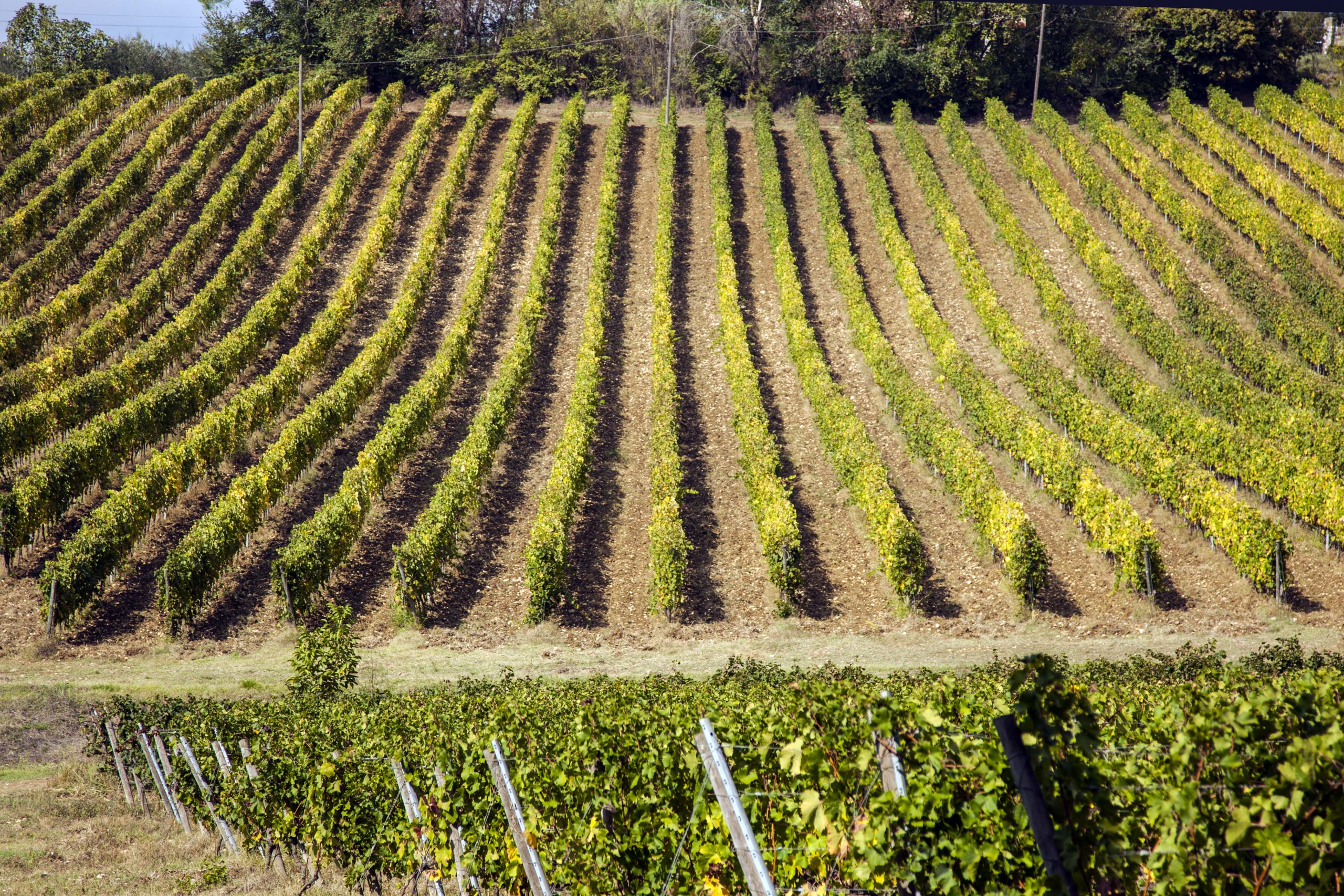
Frascati vineyards lie between 200–400 meters above sea level in the Castelli Romani, southeast of Rome and north of Lake Albano. The soils are rich in volcanic tufa and pozzolana, porous and mineral-heavy, giving Frascati its signature freshness. Many wineries still age wines in ancient Roman caves dug into the volcanic rock—an atmospheric link between past and present.
The Grapes Behind Frascati
By regulation, Frascati DOC wines must be made from at least 70% Malvasia (Bianca di Candia or Malvasia del Lazio). The remaining blend can include Trebbiano Toscano, Greco Bianco, Bombino, Bellone, and other local whites.
- Malvasia del Lazio (Puntinata): prized for aromatics and finesse.
- Trebbiano Toscano: adds acidity and freshness.
- Greco Bianco & Bellone: bring weight and complexity.
This blend creates wines that are at once bright, floral, and mineral.
Winemaking & DOC/DOCG Regulations
- Frascati DOC: minimum 11.5% ABV; produced in Secco (dry) and Amabile (off-dry) styles.
- Frascati Superiore DOCG: stricter yields, minimum 12% ABV, often richer in body and minerality.
- Frascati Superiore Riserva DOCG: aged at least 12 months, 13% ABV minimum.
- Cannellino di Frascati DOCG: a luscious dessert wine made from late-harvest or botrytized grapes, golden and honeyed.
Key Facts at a Glance
| Feature | Details |
| Region | Lazio, Castelli Romani (southeast of Rome) |
| Soil | Volcanic tufa, pozzolana |
| Grapes | ≥70% Malvasia, ≤30% Trebbiano, Greco, Bellone |
| Styles | Dry, medium-sweet, dessert (Cannellino) |
| ABV | 11.5–13% depending on DOC/DOCG |
| DOC Status | 1966 |
| DOCG Status | 2011 (Superiore & Cannellino) |
Tasting Notes
Frascati DOC wines are pale straw-yellow with delicate floral aromas (acacia, citrus blossom), orchard fruits (pear, apple, peach), and a light mineral edge. On the palate, they are crisp, dry, and refreshing, with medium body and bright acidity.
- Frascati Superiore DOCG: richer texture, honeyed notes, greater depth.
- Cannellino di Frascati DOCG: golden dessert style, with flavors of apricot, dried fruit, and honey.
Serving & Pairing
Serve Frascati chilled at 8–10 °C. Its freshness makes it an ideal aperitivo, but it shines alongside Roman and Mediterranean dishes:
- With Roman classics: cacio e pepe, carbonara, saltimbocca alla romana
- Seafood pairings: fried calamari, linguine alle vongole, grilled branzino
- Cheese pairings: Pecorino Romano, fresh ricotta, buffalo mozzarella
- Dessert pairing: Cannellino with almond biscotti or pecorino + honey
Where to Buy & Pricing
Frascati is widely available abroad, especially in the US and UK.
- Everyday DOC bottles: $12–18 (e.g., Fontana Candida, Riva de la Rosa)
- Frascati Superiore DOCG: $20–30 (e.g., Castel de Paolis, Principe Pallavicini)
- Cannellino di Frascati DOCG: $25–35 for dessert styles
Look for importers specializing in Lazio wines or order from retailers like Wine.com, Wine-Searcher, and Eataly.
Best Producers of Frascati
For those exploring beyond supermarket labels, these producers consistently deliver high quality:
- Fontana Candida – international leader, classic style
- Casale Marchese – historic family estate, aromatic Superiore DOCG
- Principe Pallavicini – elegant, terroir-driven bottlings
- Castel de Paolis – premium Superiore, highly rated by critics
Storage, Aging & Similar Wines
Frascati DOC is best enjoyed young (within 1–2 years) for maximum freshness. Superiore Riserva and Cannellino can age gracefully for 3–5 years, developing honeyed and nutty complexity.
Similar wines to explore:
- Orvieto DOC (Umbria): also a fresh, mineral-driven central Italian white.
- Soave DOC (Veneto): crisp, versatile white with volcanic soils.
- Greco di Tufo DOCG (Campania): another southern volcanic gem, richer in body.
FAQ on Frascati DOC
- What is Frascati DOC best known for?
Its crisp, floral style and role as Rome’s signature white wine. - What does “Cannellino di Frascati” mean?
A sweet DOCG style made from late-harvest grapes, often enjoyed with dessert. - Is Frascati expensive?
No—most bottles retail for under $20, with DOCG wines reaching $30+. - Is Frascati only dry?
No. While most are dry (Secco), you’ll also find Amabile (off-dry) and dessert wines.
Fun Facts & Cultural Notes
- Called the “Golden Wine of Rome”, Frascati has been celebrated since antiquity.
- Ancient Roman wine caves still serve as cellars for modern producers.
- A favorite of La Dolce Vita-era artists, actors, and writers, Frascati evokes timeless Roman glamour.
- The volcanic soils around Rome give Frascati a unique mineral lift, linking it to Italy’s great volcanic wines.
Love discovering hidden gems of Italian wine?
👉 Subscribe to the Drink Italian newsletter for exclusive stories, pairing tips, and Italian wine guides.
👉 Share this article with a fellow wine lover and start planning your Roman-inspired tasting night.
Have fun to learn more about Italian Wines and Spirits! Explore also the non-alcoholic beverages
Send us an email if you want to suggest edits, or if you are looking for more info, at
cheers@drinkitalian.com
If you are in the mood for a good book, you can try:
– The Modern History of Italian Wine by Walter Filipputti
– Hidden Gems of Italy: An Insider’s Secret Formula To Find Top-Class Italian Wines At Value Prices And Taste La Dolce Vita by Tony Margiotta
Additionally, you can discover the other wines from Lazio.